
Equality HiveEquality HiveEquality HiveEquality Hive
  • Home
  • Ghostwriting
  • BLOG
  • Book
  • About
  • Contact
  • Home
  • Ghostwriting
  • BLOG
  • Book
  • About
  • Contact
November 28, 2018

Changing the Narrative Around Prison Reform – Part 1

Changing the Narrative Around Prison Reform – Part 1
Read time – 6 ½ minutes.

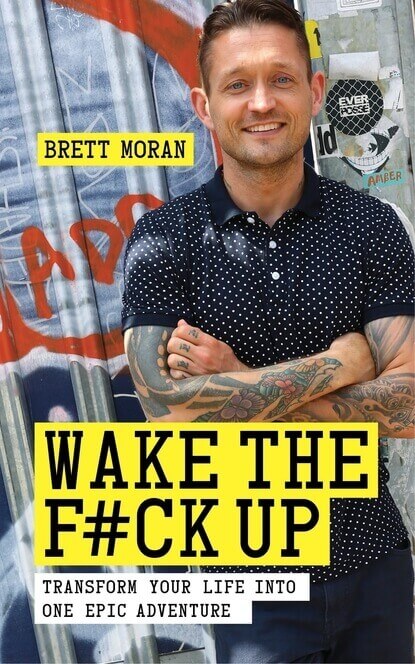
My best friend—Brett Moran—is a reformed prison convict with an incredible story of transformation.

As a crack dealer and addict, he went to prison on a driving offense, and carried on his drug habit inside. One day in the prison library he picked up a book on Buddhism to cover up a drug deal. He started reading it and something inside him broke open. He took the book back to his cell, continuing reading it under his bed covers with a flashlight, so his cellmate wouldn’t see him. 

It was the start of an awakening that led him to be an authentic, down-to-earth, spiritual teacher who is tattooed from head to toe, and author of the no-nonsense transformation book Wake the F#ck Up.


Whether he is inspiring prisoners or everyday people with the understanding that change is possible, there is no space to argue with what he shares, because he is a living example of his own teachings.

US Prison Reform

Prison reform is a hot topic at present, and covers not only trying to reduce the amount of people sent to jail in the US, but also how we can help them bounce back when they are released. The more I come to understand the US prison system, the more convinced I am that a story like Brett’s would have been far less likely if he lived here in the US, and not in the UK where he comes from (especially as in some parts of the US, prisoners aren’t allowed access to books).

Since I moved to the United States, I started to understand that there is a huge disparity between the way previous convicts are reintegrated into society in European countries, as opposed to the opportunities they receive here. But there are also recent moves to break down these disparities and create more promising paths for reformation within the prison system.

This week we’re going to focus on one aspect of prison reform—how we change the social narrative around those who have been incarcerated so we can think and talk about them differently, creating a more promising pathway for reintegration—and in next weeks post, we’ll be looking at how we begin changing the narrative around the prison system as a whole.


“Tagged and Going Down”

My own passion for prison reform dates back almost two decades to when I was teaching teenagers with severe behavioral issues. Before anyone was really talking about intersectionality, the socio-economic factors related to the likelihood of imprisonment, and the unfair racial biasing in prison sentencing, I was part of a cutting-edge team in the UK, working with young people to try and prevent them from being incarcerated.

In England a system of “tagging” was popular at that time, which meant that the last stop before prison was an ankle monitor that would act as a tool to curfew young people after 7pm.

These kids were referred to as “tagged and going down” (“going down” being the British slang used for someone who is about to enter the prison system). I worked with these young people for a number of years, using drama as a social and educational tool to help them explore the consequences of their choices, in an attempt to keep them from making that final choice which would potentially lead to their incarceration.


What I noticed was that there was already a social narrative around these young people, and an expectation of their “path to self-destruction.” The dialogue around them already had them labelled as “a lost cause” or “an inevitability.” I saw it as my job not only to help them rewrite their own story, but to change the narrative of those around them who had already marked them with certain expectations.


Good Versus Evil

We don’t just need to change our narrative around those who have a greater chance of being incarcerated. We need to change our dialogue around every aspect of prison reform too. Part of this shift lies in a deeply embedded Western narrative around good versus evil. In Western cultures—especially those who have been raised on a Hollywood diet of villains versus heroes—there can be a tendency to judge a person’s core character based on their past actions. This has been reinforced in the dialogue around incarceration. The ‘bad guy’ who ‘did wrong’ becomes a second class citizen, and there are very few opportunities built into that narrative for the average person on the street who committed a crime to reintegrate successfully.

One of the core issues is that often, when someone has committed a crime, it is viewed in isolation, rather than as being symptomatic of a whole host of inter-related socio-economic issues that created a chain of events leading to that crime. If we are thinking about prison reform, we first need to think about the context in which crimes are often committed rather than polarizing our thinking into good versus evil.

We need to be creating opportunities for those who have been incarcerated to break out of socio-cultural conditioning and actually reform in prisons. They need to be places of education and growth, and this is slowly being recognized in some parts of the US. For example, there is a movement to reverse the outdated law that keeps books from prisoners. In the latest news, Pennsylvania correction agency have just announced that they are allowing books in prisons.

This is a huge step because if we want to support someone to change their perspective, see the world through different eyes, or take a different path, it’s often going to require some kind of outside influence, such as we saw in the opening of this article with Brett Moran in the prison library.


Dov’è la Libertà?

The other consideration is how we change the narrative around those who have already been inside. Recently I watched the 1954 Italian movie ‘Dov’è la Libertà?’ which translates to ‘Where is Freedom?’ Set in Italy in the 1950s, it’s a heart-wrenching tale about how a man who has served a 22 year sentence for protecting the honor of his wife, and is released back into society with only a few lire in his pocket (the Italian currency at that time). After his effort to reintegrate back into society fails due to being too honest for the real world, he attempts to break back into prison where he feels he can make his best contribution to humanity.  
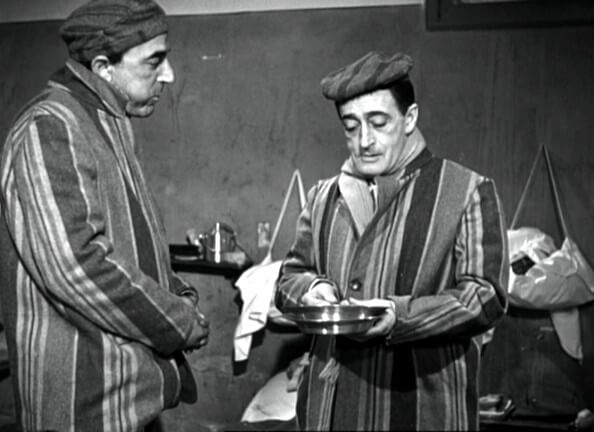
Although this film is set over 60 years ago, there are some striking parallels with the way that reforming US convicts are often thrown back into society with little or no support, and while it might be understandable that post-war Italy did not have the resources to create a meaningful reintegration program, we can’t make those same excuses today. This is especially true since it costs around $90 a night to keep someone incarcerated, so at least some of that budget needs to be kept aside for when they return to the world outside the prison walls. This can only happen if we see reintegration as a worthy investment, not just for the individual who has been incarcerated but for society in general.  


Changing the Narrative

What happens when we change the narrative is that we get incredibly inspiring individuals who can contribute their knowledge and wisdom that they learned from their lessons and bring them back to enrich society as a whole.


An example of one such individual is ConBody CEO Coss Marte, who was released from prison in 2013 after serving time for dealing drugs. While in prison, Marte was told that even though he was only in his early twenties, with his weight and cholesterol so high, he only had five years to live. He lost seventy pounds in six months while he was in prison and is now the CEO of New York’s ConBody, a “prison-style boot camp” popular among celebrities and people from all walks of life, that exclusively employs former convicts. When Marte was asked how he had brought ConBody to life, he told CNBC Make It, “I never stopped pitching myself. I’d tell my story 20, 30 times a day. I’d go on the train and talk about what I do and act a fool. Whatever it took.” His story, and what it represented to others about the ability to change, was the key to his success, and to building a company that supports others like him and demonstrates how social change is possible.

Jarrett Adams is also another great example, turning a racially motivated wrong accusation into an inspiring story. He was wrongfully accused of sexual assault at the age of seventeen and sentenced to twenty-eight years in prison. While the evidence of his white accuser was unsubstantiated, as a person of color, he was still incarcerated. He devoted his time in prison to studying law and in a Now This video he shared how his studying enabled him to go from saying, “Hey look, I’m innocent, let me out,” to “Look, I’m innocent, this case supports my claim.” With help from the Wisconsin Innocence Project, his conviction was overturned. Adams walked out of prison with $32 to his name, but despite receiving no benefits or compensation, he became a lawyer and is fighting the wrongful convictions of others in his position with the New York Innocence Project. He said, “I won’t stop pushing forward. I have an opportunity with each day to continue to chip away at the negative stigmas that are attached to people who go to prison, whether rightfully or wrongfully.”

So this is how we start to change the narrative. By making prison into an opportunity for reform, growth and learning (whether in the face of a wrong accusation, or a right one). We have a long way to go yet—and in next weeks blog we will look at how we begin changing the narrative around the US prison system in general—but our starting point is definitely being prepared to challenge the common narratives that hold fixed perceptions of those who have committed crimes, and transform them into narratives of hope and possibility.

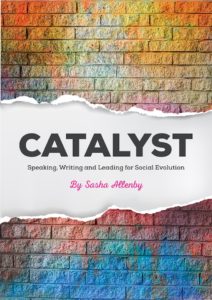
For the past decade, Sasha Allenby has been a ghostwriter for some of the greatest thought-leaders of our time. Her journey started when she co-authored a bestselling book that was published in 12 languages worldwide by industry giants, Hay House. Since then, Sasha has written over 30 books for global change agents. Following the events of the last couple of years, she turned her skill set to crafting social messages. Her latest book Catalyst: Speaking, writing and leading for social evolution supports thought-leaders to craft dynamic messages that contribute to change. 

November 5, 2018

Can you change the system while being part of it?

Read time – 9 mins.

Reva Patwardhan – Dialogue Lab Podcast

Can you change the system while being part of it? This is the question that Melanie DewBerry raised in a recent interview with Reva Patwardhan on the Dialogue Lab Podcast, a show dedicated to helping social impact leaders thrive as they create change.

The interview was a dynamic one, and a number of questions were skillfully brought to the table on the subject of being an impactful leader in a way that is grounded in a deeper truth.

Each week in the Equality Hive blog series we explore powerful and thought provoking speeches or interviews with thought leaders who are bridging the gap of inequality with their spoken or written word, and in this blog post we will take a deep dive into the interview between DewBerry and Patwardhan, because it raised some crucial questions that we all need to ask if we are stepping into a leadership role to support others to make social change.

Leaving Consensus Reality

One of the core themes of the interview was whether or not we can create change from within the current consensus reality. “If you are trying to change the system you can’t change it by being part of it,” DewBerry shared. She went on to explain the challenges of trying to change the system from within.

“The consensus reality was created on violence and bloodshed. The system was not designed to support the average person in this world. Instead, it is a system that was created for the rich, white male, to keep them—and their sons—in wealth, and to keep their business running.”

“So they send their sons to colleges to understand how to run the businesses and they open it up to the rest of us to understand how to comply and become great little worker bees, and work hard for raises, and then get attached to things, because things require more money, and then we will work harder so we can have more.” She outlined, “We are not going to win by playing their game, their way.”

Whether you are someone who is stepping into a leadership role or down on the ground doing social impact work with your local community, DewBerry highlighted that we all have to make the same leap. “If you want to shift you have to start with the man or woman in the mirror and decide you are leaving consensus reality. Because most of us don’t understand to what level we are consciously or unconsciously subjected to the influences of how we think and how we operate, since we were born into this consensus reality.”

Consensus Reality and Self-Perception

Melanie DewBerry – melaniedewberry.com

DewBerry talked about how being part of consensus reality had influenced her self-perception, until she was able to recognize and break out of it. “Consensus reality wants me to believe that I am black, and I should be angry. And part of that I still hold onto because I am angry, and I’m not afraid to be black, and at the same time, they don’t get to write my story for me.” This point was central to the message she was sharing in the interview, because it helped her listeners see beyond the perceptions that others had about them, and to shape who they were outside of the projections of others.

“So when you can leave the consensus reality, it’s not about who they told you that you are, but more about how you embody your truth,” she shared.

“Listen to the real voice that is speaking to you, that wants to show you what real peace and real freedom are. We can’t be that when we are busy fighting and disagreeing with the others. Because the truth is, as long as you are standing even a little bit in opposition you are being unconsciously manipulated by the opposition. You have to leave it to create change.”

But what about folks who are doing important work down on the ground?

In response to this notion, Patwardhan asked how this works practically, with those advocating for change within the current system. She spoke for her listeners who are making a difference in the world, including those who are trying to serve their communities, make healthcare accessible, or bring services to people who are locked away in prison, and so on. She asked, “How do they carry out the work that they care about outside of the consensus reality?”

DewBerry responded, “I’m not asking you to leave the work, but more to think about your calling, where your sense of self is so aligned that you are being led at a higher level to do the work from that place.”

She referred to Harriet Tubman as an exemplary example of this. “As a slave, Tubman freed people. But how? She looked at her situation and thought ‘I can’t participate in this anymore. You are selling my family members. I can’t give birth because who knows what would happen to my children. I have to change this.’ And she was prepared to step out and surrender despite her own safety, and not need to know how it should be done, instead, following the voice within. People say she was guarded by angels because she should have been caught many times. And she was not. In her own words she followed divine inspiration. She was outside of their system.”

DewBerry then spoke directly to the audience. “Many people have said to me what you are probably thinking now. ‘I’m no Harriet Tubman or I’m no Gandhi,’ and I say to you, ‘Yes, you are.’ We all have a calling. If you think you can do it within the system and fight that system then you are doing it without divine inspiration. And you will make changes but you won’t evolve us as a people.”

She then went on to highlight the common theme among many of the respected leaders over time. “Somewhere they had a point of awakening and they started following that divine messaging that took them out of their own thinking and out of the thinking of the consensus reality and gave them the higher way to see this.”

So working in opposition means we are being shaped by the opposition?

“So we have to be in the work in a way that is rooted in something deeper than framing the opposition?” Patwardhan asked. Then again, bringing it back to the practical she inquired, “How can we find a way of talking about this that is going to be something that people can use.” She highlighted how she works “with people in advocacy and organizations that are shaped by an oppositional framework,” and shared, “When you are fighting to reunite families, driving to the border with a law background to help families who are being separated and detained, and so on, I’m not ready to say all the system stuff needs to go away.”

The System is a Mindset

And this is where DewBerry brought everything that she was sharing together. “Being inside of the system is just a mindset,” she shared. “That’s all I am talking about.”

She highlighted that instead of reacting or responding to the current climate that we have to unite. “I think we need to come together maybe in small pockets and reframe ourselves. We have to tell our ancestral stories that help us remember who we are and what our medicinal properties are, and then start to organize ourselves from that place.” She went on to explain, “From there we could pluck out the remembering and the wisdom and embody it.”

She went on to share a story about how she shifted her mindset out of consensus reality. She told the audience that there was a period of her life where she had been understandably angry, and she knew if she carried on as she was then she would end up reacting in a way that would lead her to prison. The underlying theme was not feeling safe, so she asked for the universe to show her a sign that she was. Starting small, she went into a Macy’s store. As a black woman, she had always been followed by security guards in department stores, but on this day, she decided to ask for something different. She’d always kept her hands in her pockets in these times to show that she wasn’t stealing anything, but this time she walked around touching things. A white security guard approached her and, exasperated, she asked him, “What? What do you want?” and he turned to her and said, “I just want you to know that you have the most beautiful smile I have ever seen.” She shared how this was a turning point for leaving the mindset that had been projected onto her from the outside world.

So how do I advocate for larger social change?

Patwardhan, asked if there were any further ways that the audience can apply this teaching to social change, and DewBerry shared another important story about when she took part in a Native American vision quest a number of years ago.

“I think you have to leave the idea of change. Put it down for a minute. I’m gonna tell you a story that will frame that. So I was 4 days into my vision quest, no food, no water, and praying, when I was greeted by the Thunder Beings. They took me into a bubble where there was a world full of chaos. The sky was all grey. Children were being molested. Elders were not cared for,” she described.

She went on to outline, “Then they took me into the next bubble. The elders were resting under an apple tree. The girls there were taught to love their bodies. Children were protected. You get the picture.”

“‘Which world do you you want to live in’, they asked. And I said, ‘Easy. The world of beauty.’ And they replied, ‘Go back and create the world of beauty from the world of chaos.’”

“So instead of changing what already is, I have to take people home to the world of beauty. So, how do people create change? We have to have the vision to take each home. Instead of fighting them, let’s create a unified vision.”

She finished by sharing, “It took me 10 years to realize I had to go inside of myself and change my chaotic way of thinking and being that had been created by the consensus reality, and inhabit the beauty inside. And now I can honestly tell you that I have more beauty that I am creating from and that is making change in everybody I touch and everybody who touches me.”

You can listen to the full Dialogue Lab interview with Melanie DewBerry here.

BREAKING DOWN DEWBERRY’S MESSAGE

In my new book Catalyst: Speaking, Writing and Leading for Social Evolution, I share different ways to craft evolutionary messages that contribute to social change. DewBerry shares a social evolutionary message on a number of levels which you can apply to your own messaging as an evolutionary thought leader.

  1. Visionary – One of the most powerful aspects of a social evolutionary message is sharing a vision with your audience that is based on a reality that they may not be able to see yet. If you are leading others to create change, one of the most powerful components is helping your audience envisage a world outside the one that they are currently experiencing.
  2. Deconstructing the Status Quo -An evolutionary thought-leader helps their audience break out of the limitations of the status quo. DewBerry’s explanation of consensus reality not only challenged the status quo, it explained the framework in which it had been constructed, and highlighted that it was a mindset that the audience needed to break out of for themselves and those around them.
  3. Grounded in History – Sharing Harriet Tubman’s story offered a practical example of the way in which DewBerry’s message had been applied historically.
  4. Personal Story – The story that DewBerry shared about the moment with the security guard that created a turning point, as well as of her vision quest, created a powerful, authentic and relatable connection with the listener. Stories such as these (and the context she shares with readers about why stories are important in the full recorded interview), ground concepts in real life experiences.
  5. Vulnerability with Strength – Before the story about the security guard (which she went into in much greater detail on the recorded interview), she shared with a mixture of vulnerability and strength her own path with her anger, how valid her anger was, and how she had worked to break free from it. The mark of an evolutionary thought-leader is someone who is willing to own their challenges and share with the audience how they have overcome them.

These core qualities can be applied to crafting your own social evolutionary message. However, it’s also essential to understand that much of the wisdom that DewBerry shared comes from a lived experience outside of crafting a powerful message for change. With a leader such as DewBerry—alongside a powerful interviewer such as Patwardhan—the teachings shared are not just carefully crafted, they are deeply lived too.

You can sign up for further social evolutionary blogs on our homepage. Each week we break down powerful speeches and interviews, as well as sharing our expertise on crafting messages for social change.


For the past decade, Sasha Allenby has been a ghostwriter for some of the greatest through-leaders of our time. Her journey started when she co-authored a bestselling book that was published in 12 languages worldwide by industry giants, Hay House. Since then, Sasha has written over 30 books for global change agents. Following the events of 2016, she turned her skill set to crafting social messages. Her latest book Catalyst: Speaking, writing and leading for social evolution supports thought leaders to craft dynamic messages that contribute to change. 

Recent Posts
  • Writing a book? Make sure you set the tone right for your reader. PART THREE
  • Writing a book? Make sure you set the tone right for your reader. PART TWO
  • Writing a book? Make sure you set the tone right for your reader. PART ONE
  • Can Every Act of Business be an Act of Love . . . and Still be Effective?
  • Are You Ready to Write a Book? Checklist for Social Entrepreneurs
Archives
  • July 2019
  • June 2019
  • May 2019
  • April 2019
  • March 2019
  • February 2019
  • January 2019
  • November 2018
  • September 2018
  • July 2018